
Getting to the Peter and Paul Fortress from Central St Petersburg: Every Option, and Why a Guided Tour Changes Everything
The Peter and Paul Fortress sits on Zayachy Island, a small patch of land in the Neva River just across from the Winter Palace and the Hermitage. It is the birthplace of St Petersburg—Peter the Great founded the city here in 1703—and it remains one of the most historically dense sites in Russia. Within its walls lie the Peter and Paul Cathedral (the burial place of nearly every Romanov emperor), the Trubetskoy Bastion Prison (where political prisoners were held under the tsars), the Mint, and a sprawling complex of museums and exhibitions .
Getting there from the center of the city is not difficult, but the options vary significantly in comfort, speed, and what you actually see along the way. This guide covers every realistic way to reach the fortress from central St Petersburg, with the practical details you need to choose the right one. It also makes the case for why a guided tour—whether private or small-group—is often the smartest choice, not just for the journey but for what happens once you arrive.
The Geography: Where the Fortress Actually Sits
Before listing the options, it helps to understand the layout. The fortress occupies Zayachy Island, which is connected to the Petrograd Side by the Ioannovsky Bridge. From Nevsky Prospect and the historic center, you are looking at a journey of roughly 2 to 3 kilometers, depending on your starting point . The Neva is wide here, and the bridges and embankments offer some of the best views in the city. That geography matters because it shapes every transport option: you are either walking toward the river, taking a metro that deposits you on the Petrograd Side, or riding a bus or taxi that crosses the water.
Option One: Walking
Walking is the simplest and, for many visitors, the most rewarding way to reach the fortress. From Nevsky Prospect, the distance is about 2 miles (roughly 3 kilometers), and the walk takes around 35 to 40 minutes at a relaxed pace . The route typically follows the Moika River or the Neva embankments, passing landmarks like the Church of the Savior on Spilled Blood and the Summer Garden before crossing the Trinity Bridge or continuing along the Petrograd Side to the Ioannovsky Bridge.
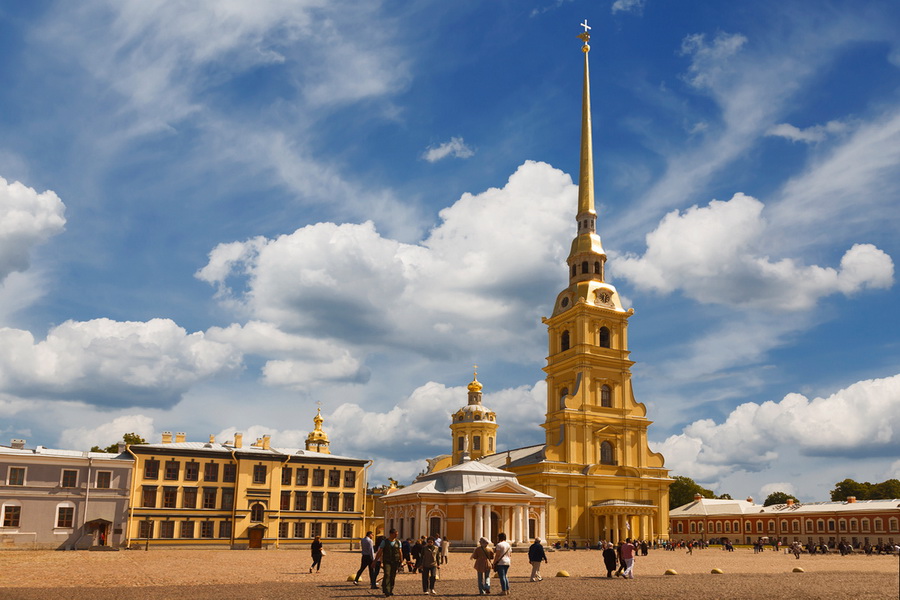
The advantage of walking is obvious: you see the city. The approach to the fortress across the Ioannovsky Bridge, with the Peter and Paul Cathedral’s golden spire rising ahead of you, is one of the great arrivals in St Petersburg. The disadvantage is weather. St Petersburg is famous for its rain and wind, and a 40-minute walk in October or November can be miserable if you are not dressed for it. Walking also requires a decent sense of direction, though the spire is a reliable landmark for most of the route.
For travelers staying near the Hermitage or Palace Square, the walk is shorter—perhaps 25 to 30 minutes—and follows the Neva embankment almost the entire way. It is a fine option for a clear day, but not one to rely on if you are short on time or visiting in winter.
Option Two: The Metro
The St Petersburg Metro is efficient, cheap, and an attraction in its own right, but it does not drop you at the fortress gate. The closest station is Gorkovskaya on the blue line (Line 2). From there, you walk through Alexandrovsky Park to the Ioannovsky Bridge, a distance of about 1.5 kilometers, which takes roughly 15 to 20 minutes . The walk through the park is pleasant in good weather and passes the city’s small zoo and a few cafes.
Other metro options exist but require transfers. Sportivnaya station connects to trams No. 6 and 40, and Petrogradskaya connects to bus No. 46 . These are useful if you are coming from a different part of the city, but for a visitor starting in the center, Gorkovskaya is the straightforward choice. The metro ride itself is quick—perhaps 10 to 15 minutes from Nevsky Prospect—but the total journey time, including the walk from the station, is comparable to walking the whole way from the center. The metro is best when the weather is poor or when you are starting from further afield.
Option Three: Bus
Several bus routes serve the fortress area. Buses 46, 49, 10, 14, and 191 stop near Troitskaya Square or Prospekt Dobrolyubova, both within a 9- to 14-minute walk of the fortress entrance . From Ploshchad Vosstaniya, for example, a bus runs every 20 minutes and takes about 21 minutes to reach Prospekt Dobrolyubova, from which you walk to the fortress . The fare is low—around $1—and the buses are a practical way to cover distance without the depth of the metro.
The challenge with buses is navigation. St Petersburg bus stops are not always clearly marked in English, and the routes can be confusing for a first-time visitor. If you do not speak Russian or have a reliable mapping app, the bus is a less comfortable option than the metro. It is also subject to traffic, which can be heavy on the Petrograd Side during rush hour.
Option Four: Taxi or Ride-Hailing
A taxi from Nevsky Prospect to the fortress takes about 10 to 15 minutes in normal traffic and costs a moderate fare by European standards. Ride-hailing apps like Yandex Go (the dominant service in Russia) make this easy to arrange, with the destination entered in the app and the fare shown upfront. For travelers with limited mobility, luggage, or children, a taxi is the most comfortable option. The downside is that you miss the city entirely—the journey becomes a sealed box between two points, and the approach to the fortress, which is half the pleasure, is reduced to a glimpse through a window.
Option Five: A Guided Tour That Includes Transport
This is where the calculus changes. Many guided tours of the Peter and Paul Fortress include pickup from central hotels or a meeting point, transport to the island, and a guided walk through the complex. The State Museum of the History of St Petersburg, which administers the fortress, offers official sightseeing tours that include the cathedral, the Grand Duke’s Tomb, and the Trubetskoy Bastion Prison, lasting about 1.5 hours and available in English with advance booking . Private guides and tour companies offer similar packages, often with hotel pickup and flexible timing .
The transport component is only part of the value. The real advantage is what happens when you arrive.
Why a Guided Tour Is Worth It
The Fortress Is Not Self-Explanatory
The Peter and Paul Fortress one of the best things to do in St Petersburg is a large, complex site with multiple buildings, each with its own history and ticketing requirements. The territory of Zayachy Island is free to enter, but the cathedral, the prison, the Mint museum, and special exhibitions all require separate tickets or a combined pass . Without preparation, it is easy to spend your first 30 minutes figuring out what to see and where to buy tickets, rather than actually seeing anything.
A guide solves this before you arrive. They know which ticket combination makes sense for your interests, where the ticket offices are (and when they close—30 minutes before exhibitions, in most cases ), and how to sequence the visit so you are not backtracking across the island. The official museum tours include entry to the cathedral and prison, which are the two essential interior experiences . Private guides can tailor the route to your priorities, whether that is Romanov history, the prison’s grim stories, or the architecture of Domenico Trezzini.

Book your excursions in St Petersburg
The Stories Are the Point
The Peter and Paul Cathedral is the tallest building in St Petersburg and the burial place of Peter the Great, Catherine the Great, and Nicholas II and his family. Standing in the nave without context, you see tombs and gold. With a guide, you hear about the Romanov dynasty’s triumphs and its violent end, the strange fate of the imperial remains, and the cathedral’s role as a symbol of imperial power on the Neva. The Trubetskoy Bastion Prison is even more dependent on narration: it is a series of bare cells and corridors, and its power comes from the stories of the people held there—Dostoevsky, the Decembrists, the revolutionaries of the late 19th century.
Reviews of guided tours consistently highlight this dimension. Travelers describe guides who bring the history to life with humor and detail, answer questions beyond the script, and turn what could be a dry walk through old buildings into a narrative that stays with you . One reviewer noted that their guide even wove in connections to Pushkin and the causes of St Petersburg’s floods, expanding the tour beyond its nominal subject in ways that felt organic rather than padded .
Logistics and Language
The fortress’s signage is partly in English, but not everything is translated, and the nuance of Russian history is not always captured in brief labels. An English-speaking guide bridges that gap. For travelers who do not read Cyrillic, navigating the ticket queues and exhibition halls independently can be a source of low-grade stress that detracts from the experience. A guide absorbs that stress.
There is also the matter of the midday cannon shot. The fortress fires a blank cannon from the Naryshkin Bastion at noon every day, a tradition dating back to the 18th century. A guide will time your visit so you are in the right place to see it—and will explain why it happens, which is more interesting than the bang itself.
The Transport Becomes Part of the Tour
When you book a guided tour with transport, the journey to the fortress stops being dead time. A good guide will point out landmarks along the way, explain the geography of the Neva delta, and set the stage for what you are about to see. The approach across the Ioannovsky Bridge, which is a highlight for walkers, becomes part of the narrative rather than just a means of getting from one side of the water to the other.
For travelers with limited time—a common constraint in St Petersburg, where the Hermitage alone can consume a full day—a guided tour is also efficient. The guide knows how long to spend in each section, when to avoid the crowds, and how to exit smoothly to the next stop on your itinerary. The official museum tour lasts 1.5 hours, which is a realistic minimum for seeing the cathedral and prison without rushing . Doing it independently often takes longer, simply because of the trial-and-error of navigation.
The Bottom Line
If you are confident, have a good map, and the weather is fine, walking to the Peter and Paul Fortress from the center is a genuinely lovely way to arrive. The metro is a solid fallback, and taxis are there when comfort matters more than cost or scenery. But the fortress itself rewards preparation, and a guided tour—whether the official museum option or a private guide—turns a visit from a stroll through old walls into an encounter with the city’s founding story. The transport is the least important part of that equation. What you carry away from the cathedral and the prison cells is what matters, and a guide is the difference between seeing them and understanding them.

Book a St Petersburg city tour today