The Golden Window: Why Late May to Early July Is the Best Time to Visit St. Petersburg on a Package Tour
Planning a package tour to St. Petersburg involves a trade-off that few destinations demand so starkly: you can have light, or you can have space. You can have warmth, or you can have the Hermitage nearly to yourself. The city’s latitude—roughly 60 degrees north—dictates everything, from the legendary White Nights of early summer to the crushing darkness of December. For the package tourist, whose itinerary is fixed and whose time is finite, the calculus is different than for the independent traveler. You are not simply choosing a month; you are choosing which version of St. Petersburg your tour operator can deliver most effectively.

The consensus among tour operators, climate data, and seasonal tourism research points to a clear answer: late May through early July is the best time to visit St. Petersburg on a package tour, with September as a strong, quieter alternative for those who prioritize comfort over spectacle. This window offers the city at its most navigable, its most luminous, and—crucially for a package itinerary—its most operationally reliable. Understanding why requires looking beyond simple weather averages and into how a guided tour actually functions in each season.
The Case for the White Nights Window
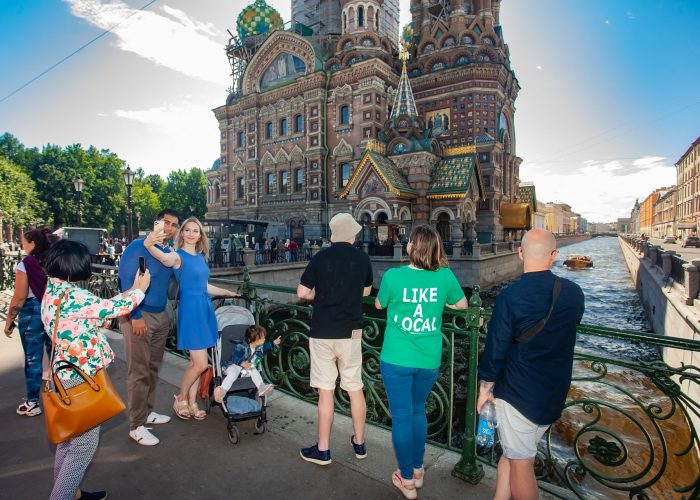
The defining feature of a St. Petersburg summer is not heat but light. From late May through early July, the city experiences the phenomenon known as the White Nights, when the sun barely dips below the horizon and the sky remains a luminous twilight well past midnight. For a package tourist, this is not merely a postcard curiosity; it is a practical gift. A guided itinerary that includes an evening canal cruise or a late-afternoon walking tour of Palace Square gains an entirely different dimension when the light is golden at 10 p.m. and the city is still awake .
The climatic data supports this window as the most hospitable for outdoor sightseeing. Average daily temperatures climb from roughly 11.5°C in May to 16.1°C in June and peak at 19.1°C in July . These are not beach temperatures, but they are comfortable for the kind of walking that package tours demand—through the gardens of Peterhof, along the canals of the Moika, and across the vast squares of the imperial center. Precipitation, however, is a consideration: June sees around 68.6 mm and July jumps to 84.1 mm, making July the wettest month of the year . This is why late June and early July, while popular, carry a slight risk of rain that May and early June largely avoid. The tourism score compiled by Weather Spark, which favors clear, rainless days with perceived temperatures between 18°C and 27°C, peaks in the third week of July, but the broader favorable window begins in late June . For package tourists, the ideal compromise is late May through mid-June: you capture the fullest expression of the White Nights, the city is green and blooming, and you dodge the heaviest summer rains.

The operational advantages of this window are equally significant. Package tours are built around fixed schedules: museum entries, coach transfers, and guided walks happen at predetermined times. In the shoulder months of May and September, the Hermitage and other major museums are noticeably less congested than in July and August, when the peak tourist flow—driven by school holidays and the confluence of the White Nights with the St. Petersburg International Economic Forum—can make even a pre-booked group walking tour in St Petersburg entry feel rushed . A tour operator quoted in a Russian travel industry analysis noted that the end of spring and beginning of summer, particularly around forum periods, have become markers for when prices spike and crowds swell, leading some savvy travelers to avoid that exact slice of late May and early June . The sweet spot, then, is the first half of June, before the forum season fully peaks and before July’s rains settle in.
Why September Deserves Serious Consideration
If the White Nights are not a non-negotiable item on your list, September emerges as the connoisseur’s choice for a package tour. The crowds thin appreciably after the first week of the month, hotel rates begin to soften, and the city takes on the golden hues that Russians call zolotaya osen—golden autumn . Average temperatures in September settle around 12.4°C, still mild enough for extended walking tours, and precipitation drops to 57 mm, less than the summer months . The package infrastructure remains fully operational: the fountains at Peterhof typically run until late September or early October, boat navigation on the Neva and canals continues, and the major museums are fully accessible without the summer queues .

What September lacks is the theatricality of the White Nights. The evenings draw in, and by late September the city is settling into its autumn gloom. But for a traveler who values the substance of the tour—the art in the Hermitage, the architecture of the Church of the Savior on Blood, the amber room at Catherine Palace—over the atmospheric bonus of midnight twilight, September offers a more relaxed and often more affordable package experience. The research on seasonal tourism flows in St. Petersburg confirms that the peak runs from June to July, with the minimum in November; September sits comfortably in the shoulder, offering the best balance of access and breathing room .

The Winter Alternative: For a Different Kind of Package
It would be incomplete to discuss St. Petersburg without acknowledging its winter. From December through February, the city becomes a different proposition entirely—not a walking tour destination, but an interiors-and-architecture experience. A walking tour tour in St Petersburg in winter is cheaper, the museums are emptier, and the snow-covered baroque facades of the Catherine Palace or the frozen canals create a genuinely magical visual register that summer cannot replicate . The trade-off is severe: average temperatures hover between -2.5°C and -5°C, daylight is scarce (December offers barely six hours of usable light), and outdoor activities like the New Holland Island tour or long walks through Peterhof’s parks become impractical or unpleasant .
For the package tourist, winter works best if the itinerary is deliberately weighted toward interiors: the Hermitage, the Russian Museum, the Fabergé Museum, and perhaps a metro tour, which one tour operator describes as “the best bad-weather shelter in the city” . The Moscow Metro, with its 268 stations, is indeed a magnificent underground palace, but in St. Petersburg the equivalent strategy involves leaning into the city’s dense cluster of indoor attractions. The risk is that a winter package can feel compressed and claustrophobic, with too much time in coaches and museums and too little of the city’s outdoor grandeur. It is a valid choice, but it is not the best choice for a first-time package visitor who wants to understand why St. Petersburg is called the Venice of the North.
The Verdict for the Package Tourist
The best time to visit St. Petersburg on a package tour is late May through the first half of June. This window delivers the fullest possible expression of the city’s unique identity—the White Nights—while avoiding the heaviest summer rains and the peak July crowds. The temperatures are mild, the parks are green, the canals are navigable, and the evening light transforms even a standard panoramic city tour into something memorable . For travelers who can tolerate a small risk of rain and want the maximum visual and atmospheric payoff from a guided itinerary, this is the obvious choice.
If your priorities lean toward comfort, lower prices, and fewer fellow tourists, September is the intelligent alternative. The city remains fully open, the weather is still cooperative for walking, and the golden autumn light offers its own quiet beauty . What you sacrifice is the midnight sun, and for some travelers, that is a sacrifice worth making.
What you should avoid, if possible, is the trap of late July and August. These months combine the highest precipitation of the year with the densest tourist traffic, and a package tour—which already moves at a set pace—can feel particularly pressured when every museum hall is thronged and every canal boat is full . Similarly, the deep winter months of December and January offer a beautiful but limited experience, one that works best for repeat visitors or those with a specific interest in imperial interiors and snowy landscapes.
St. Petersburg does not reveal itself easily in any season. It is a city of extremes—of light and darkness, of grandeur and intimacy, of crowds and solitude. The package tourist’s task is to choose which extreme to embrace. The answer, for most, lies in the luminous weeks when the sun refuses to set and the city, briefly, seems to hold nothing back.

Book a guided tour of St Petersburg today