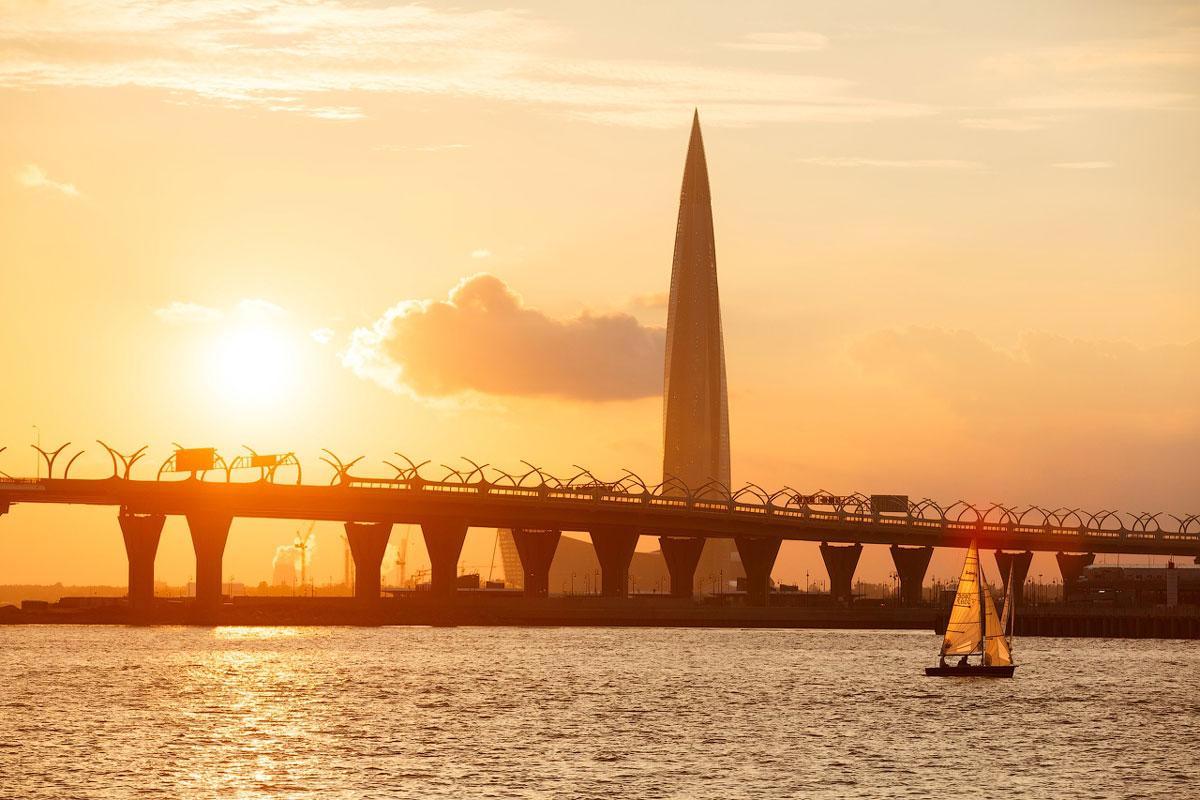
Twenty-four hours in St. Petersburg is an act of beautiful brutality. You will not see the city. You will barely scratch its gilded surface. But if you approach the day with discipline and a willingness to let some things go, you can still capture the essential triad of the Northern Capital: imperial art, Orthodox grandeur, and the haunting beauty of the Neva. This itinerary is not for the leisurely traveler. It is for the short-break visitor who wants to feel, even briefly, the pulse of a city that has always demanded more time than anyone can give.
Before You Go: The Non-Negotiables
A one-day visit leaves zero margin for error. The most critical preparation is your visa. Travelers from the UK, USA, Canada, and Australia are not eligible for Russia’s e-visa system and must obtain a traditional consular visa, a process that requires weeks and cannot be rushed. Start this at least a month before travel. Equally important: book your Hermitage ticket online through the official museum website. This single act will save you an hour or more of queuing, time you cannot afford to lose .
Book accommodation within walking distance of Nevsky Prospect or Admiralteyskaya metro station. Every minute spent in transit is a minute stolen from the city. Pack light, wear comfortable shoes, and prepare for a day that begins early and ends late.
08:00 — Palace Square and the Hermitage
Arrive at Palace Square before the museum opens. Stand in the vast emptiness of the square, with the Alexander Column at its center and the Winter Palace’s green-and-white facade stretching along the Neva. This is the St. Petersburg of the imagination, and it belongs to you for a few precious minutes before the tour groups arrive.
When the doors open, move with purpose. The Hermitage holds over three million items, and attempting comprehensive coverage is an act of self-sabotage. Head directly to the second floor for the European old masters: the Rembrandts, the two Leonardo da Vinci Madonnas, the Titians. Then ascend to the third floor for the Impressionists and Post-Impressionists—Monet, Renoir, Cézanne, Van Gogh—a collection that rivals Paris . The ancient antiquities on the ground floor are magnificent but must be sacrificed. Give yourself two hours inside, no more. Museum fatigue is real, and you have an entire city waiting outside.
Check the opening hours carefully before you go. The museum is closed on Mondays. On Wednesdays, Thursdays, and Sundays it operates from 11:00 to 18:00, while Tuesdays, Fridays, and Saturdays offer extended hours until 20:00 . If your visit falls on an extended day, consider reversing the itinerary and visiting in the late afternoon, when the morning crowds have thinned.
10:30 — A Quick Russian Refuel
Exit the Hermitage and walk toward Bolshaya Konyushennaya Street. Here you will find one of the city’s beloved pyshechnaya, the Soviet-era doughnut cafés where remarkably cheap, freshly fried doughnuts are served with powdered sugar and strong coffee. It is fast, unpretentious, and quintessentially St. Petersburg. You will be in and out in twenty minutes, fortified for the next leg.
11:00 — St. Isaac’s Cathedral and the Colonnade
Walk along the Moika or through the quiet streets toward St. Isaac’s Cathedral, the vast neoclassical monument that dominates the skyline with its gilded central dome. The interior is a showcase of malachite, lapis lazuli, and mosaic work, but the true prize is the colonnade. Purchase the separate ticket and climb the 262 steps to the top. The 360-degree panorama of St. Petersburg is the definitive view of the city: the Neva, the Admiralty, the endless rooftops stretching toward the horizon .
Be aware of the schedule. St. Isaac’s is generally open daily from 10:00 to 18:00, with evening sessions from 18:00 to 21:30 between May and September. It closes on the third Wednesday of the month in winter . The cathedral entrance is approximately 450 rubles, with the colonnade climb costing an additional 300 rubles . Budget forty-five minutes for the interior and the climb combined.
12:30 — The Church of the Savior on Spilled Blood
From St. Isaac’s, walk along the embankment or through the quiet streets toward the Church of the Savior on Spilled Blood. Built on the exact spot where Tsar Alexander II was assassinated in 1881, this cathedral is a deliberate departure from the neoclassical restraint of the rest of the city. Its colorful onion domes and intricate facade draw inevitable comparisons to St. Basil’s in Moscow, but the interior is what truly astonishes. Over 7,000 square meters of mosaic cover the walls, depicting biblical scenes with a vibrancy and density that must be seen to be believed.
The church is open daily from 10:00 to 18:00, with evening sessions from 18:00 to 21:30 between May and September. It is closed on Wednesdays . Entrance is approximately 450 rubles . Give yourself forty-five minutes to absorb the mosaics. A canopy preserves the cobblestones where the Tsar fell, a sobering reminder of the building’s purpose as a memorial.
If you are moving quickly, you can be back on the street by 13:30. If you linger—and you should—adjust the afternoon accordingly.
Books package tour in St Petersburg
13:30 — Lunch on Nevsky Prospect
Walk toward Nevsky Prospect for a quick but satisfying lunch. Resist the tourist-oriented establishments directly on the avenue. Instead, seek out a stolovaya, a Soviet-style canteen where you can point at dishes behind glass and assemble a meal of borscht, pelmeni, and salad for a few hundred rubles. It is fast, filling, and authentically local.
If you prefer something with a view, the second-floor bistro in the Singer House (Dom Knigi) on Nevsky Prospect offers panoramic windows facing Kazan Cathedral. The French-influenced menu is reliable, and the vantage point over the cathedral colonnade is unmatched. Either way, keep lunch to forty-five minutes. The clock is unforgiving.
14:30 — Peter and Paul Fortress
Take the metro from Nevsky Prospect or Gostiny Dvor to Gorkovskaya station, emerging directly beside the Peter and Paul Fortress. This is where St. Petersburg began in 1703, and the site retains a powerful sense of origins. Entry to the fortress grounds is free, allowing you to walk the walls and take in views across the Neva toward the Winter Palace .
The essential stop is the Peter and Paul Cathedral, the burial place of nearly all the Romanov emperors and empresses, from Peter the Great to Nicholas II and his family. The interior is austere and light-filled, with a soaring iconostasis and the gilded tombs of the rulers who built the Russian Empire. Allow an hour for the fortress and cathedral combined. If you are moving swiftly, the Trubetskoy Bastion Prison, which housed political prisoners under the Tsarist regime, offers a chilling counterpoint to the imperial grandeur and requires only thirty minutes.
16:00 — The Choice: Nevsky Prospect or the Neva
With two hours remaining before dinner, you face a decision. The first option is to return to the city center and walk Nevsky Prospect from Kazan Cathedral to the Alexander Column, absorbing the commercial and cultural artery of the city. Kazan Cathedral, with its sweeping colonnade modeled on St. Peter’s in Rome, is free to enter and remains an active place of worship. A quick visit to light a candle and observe the faithful is a grounding counterpoint to the museum-like atmosphere of the other cathedrals.
The second option is to walk the Neva embankment from the fortress back toward the Admiralty, watching the light change over the water. This is the St. Petersburg of Pushkin and Dostoevsky, the city of stone and sky. If you are visiting during the White Nights period (late May through early July), the evening light will be extraordinary, and the embankment will be alive with locals and visitors alike.
Choose based on your energy. If your legs are aching, the embankment walk is gentler. If you want one more dose of urban energy, Nevsky Prospect delivers.
18:30 — Dinner and a Final Stroll
Book a table somewhere central but not rushed. The city has an exceptional restaurant scene, from refined Russian cuisine to contemporary European options. If you are visiting during the White Nights, take a late stroll across one of the illuminated bridges after dinner. The sky never fully darkens, and the city takes on an ethereal, dreamlike quality that no photograph can capture. If you are traveling outside the White Nights, consider an evening at the Mariinsky or Mikhailovsky Theatre if tickets are available—both offer world-class ballet and opera, and even a partial evening in one of Russia’s great historic theatres is worth the investment.
A Final Word on Impossible Choices
Twenty-four hours in St. Petersburg for touring is an impossible assignment. The city has a way of expanding to fill whatever time you give it, and then asking for more. You will not see Peterhof. You will not see Tsarskoye Selo or the Amber Room. You will not climb Smolny’s bell tower or wander the halls of the Russian Museum. Accept this before you arrive, and the day becomes not a checklist of failures but a succession of gifts.
The itinerary above prioritizes the essential: one world-class museum, two iconic cathedrals, the city’s founding site, and a walk through its beating heart. It leaves room for doughnuts, for unplanned detours, and for the simple act of standing on a bridge and watching the light change over the water.
Book your visa and your Hermitage ticket in advance. Then arrive with a plan but not a rigid schedule. Let the city surprise you. St. Petersburg has been doing exactly that for over three hundred years, and it will not stop for you.
Book a package excursion to St Petersburg Russia today