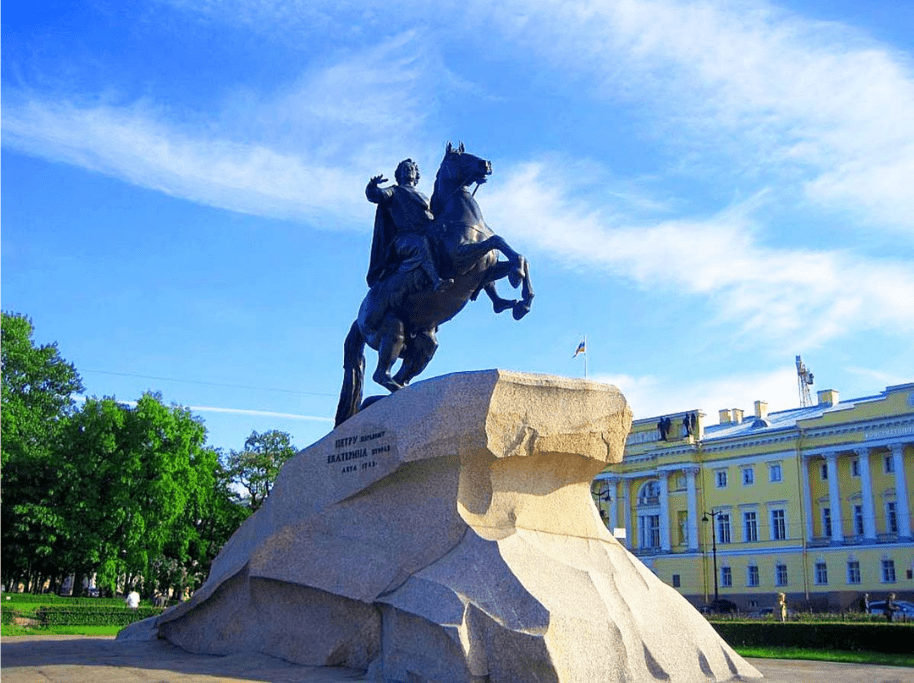
The Case for a Private, English-Speaking Guide in St. Petersburg
St. Petersburg is a city that rewards preparation but punishes rigidity. It is vast, layered, and often logistically opaque to the first-time visitor—particularly one arriving from an English-speaking country. The Hermitage alone holds over three million items across six buildings , the suburban palaces sit miles outside the city center, and the queues at major sites can consume hours of a short trip. For an English speaker who wants not merely to see St. Petersburg but to genuinely experience it, a private guide is not a luxury. It is the single most effective investment you can make in the quality of your visit. Below, I set out the practical, cultural, and experiential reasons why this is the case. Learn more about what to expect on a guided tour of St Petersburg.
Navigating the Logistics That Consume Independent Travelers
The first argument for a private guide is brutally practical: time. St. Petersburg’s headline attractions are among the most crowded in Europe. The Hermitage, Catherine Palace with its Amber Room, and Peterhof’s fountain gardens all draw enormous daily volumes, and the ticket-and-entry systems can be impenetrable to outsiders. A private guide arranges tickets in advance, in your name, and walks you past the general admission queues . One traveler who had previously taken a small-group tour and then upgraded to a private experience noted that “the smaller the group, the easier it is to bypass the lines,” and that while group-tour participants were handed audioguides at the Faberge Museum, the private guide provided a live, personalized commentary .
This logistical advantage extends beyond museum entries. St. Petersburg is a city of dispersed attractions: the historic center, Vasilyevsky Island, the Peter and Paul Fortress, and the suburban estates of Peterhof, Tsarskoye Selo, and Pavlovsk. A private guide with a vehicle transforms these from exhausting logistical puzzles into seamless transitions. One operator describes the difference plainly: a group tour means “a bus with a microphone and forty strangers,” while a private tour means your own program, your own pace, and a driver waiting where and when you need them . For English speakers, this also eliminates the stress of navigating marshy, limited public transport information or unreliable taxi apps in a city where signage and announcements are predominantly in Russian.
There is also the matter of visa formalities for cruise passengers. Cruise travelers to St. Petersburg can disembark without a visa only if they are on an organized tour, whether ship-sponsored or privately arranged. A private guide can secure the necessary tour visa documentation, allowing you to bypass the ship’s excursion desk and explore on your own terms—often at a lower price and with far greater flexibility . This is a niche but critical point for the many English-speaking visitors who arrive by sea.

The Language Barrier Is Deeper Than You Think
English is not widely spoken in St. Petersburg outside of major hotels and tourist-oriented restaurants. This is not a criticism; it is simply the reality of a city that receives far fewer Anglophone visitors than Western European capitals. Menus in neighborhood cafes, museum labels in smaller galleries, and the rapid-fire announcements in the metro are all in Russian. More importantly, the historical and cultural context that makes St. Petersburg intelligible—the sieges, the revolutions, the imperial excesses, the artistic ferment of the Silver Age—is not readily accessible through English-language signage alone.
A private English-speaking guided tour in St Petersburg bridges this gap completely. The best guides are not translators but interpreters of culture. They can explain why the Church of the Savior on Spilled Blood looks nothing like the neoclassical city around it, why the Hermitage’s collection is arranged as it is, and what life was like in the communal apartments that still line certain central streets. One reviewer of a St. Petersburg guide described how she “quoted poetry” and “showed photographic material to better understand history,” transforming a walk through parks and palaces into a coherent narrative rather than a sequence of disconnected sights . For an English speaker who wants understanding rather than mere exposure, this is invaluable.
Moreover, the practical value of having a native Russian speaker at your side cannot be overstated. They can order for you, negotiate, recommend non-tourist restaurants, and handle the small crises that inevitably arise when traveling in a country where you do not speak the language. One private guide service explicitly lists “assistance” as a core benefit: help with ballet tickets, honest hotel opinions, and a list of authentic cafes off the tourist track .
Customization: The Difference Between a Tour and Your Tour
The standard group itinerary in St. Petersburg is remarkably uniform: Hermitage in the morning, Church on Spilled Blood, perhaps Peterhof in the afternoon. It is a fine itinerary, but it is not tailored to anyone in particular. A private guide allows you to shape the day around your actual interests. Are you a fan of Dostoevsky? Your guide can walk you through the neighborhoods of Crime and Punishment, pointing out the courtyards and stairwells that appear in the novel. Are you traveling with children? The itinerary can be shortened, broken up with park time, and focused on the most visually arresting sites rather than the most historically dense ones. Are you interested in Soviet history? The guide can shift the emphasis toward the Siege of Leningrad, the defense of the city, and the quieter monuments that commemorate it.
This customization is not merely a matter of preference; it is a matter of stamina and satisfaction. St. Petersburg is a walking tour city, and its museums are exhausting. A private guide can read your energy level and adjust accordingly. One operator describes the private tour philosophy as “your choice of every minute, not the guide’s script,” with the route changing on the fly if you want to linger somewhere or skip something entirely . The guide meets you at your hotel, at the museum, or even at the airport, and the day unfolds at your pace.
For English speakers in particular, this flexibility has an added dimension: the ability to ask questions freely. In a group tour, questions are public performances, and the guide’s time is divided among dozens of people. In a private tour, you can ask about the things that actually interest you—the provenance of a painting, the mechanics of a fountain, the meaning of a particular architectural detail—and receive an answer tailored to your curiosity rather than a rehearsed snippet.

The Suburban Palaces and the Value of a Vehicle
Peterhof, Tsarskoye Selo, and Pavlovsk are among the most magnificent imperial estates in Europe, and they are also the most difficult to reach independently. Peterhof lies roughly 30 kilometers west of the city, accessible by hydrofoil in summer or by a combination of train and bus that can take well over an hour each way. Tsarskoye Selo, home to the Catherine Palace and its Amber Room, is similarly distant. A private guide with a vehicle collapses these distances. One tour description notes that the drive from St. Petersburg to Tsarskoye Selo takes about 30 minutes in a private car, with the guide meeting you at the palace and conducting you through the parts of the estate that interest you most—whether that is Catherine the Great’s history, Soviet-era restoration, or the park architecture .
This is particularly important during the White Nights season, when daylight extends late into the evening and the suburbs take on an almost hallucinatory beauty. A private guide can arrange evening visits, private picnics in the parks, or a boat trip back to the city as the sun finally sets. None of this is possible on a fixed group schedule. The private tour is, in this sense, not just a more comfortable way to see St. Petersburg; it is a way to see a version of St. Petersburg that group travelers simply cannot access.
St Petersburg Private guides book today
The Human Dimension: Guides as Cultural Ambassadors
There is a final argument, harder to quantify but consistently reported by travelers who choose private guides. It concerns the quality of the human encounter. A good guide is not an audio track with legs. They are a person with their own relationship to the city, and that relationship can be transmitted to you in ways that enrich the visit immeasurably. The reviewer who toured with Natalia Bazhenova described feeling “as if with your closest relative,” with an “energetically warm atmosphere” that left “the best moving memories” . Another reviewer noted that the guide “anticipates all the customer’s wishes” and showed “interesting and non-tourist places to eat” .
For English speakers, this human connection has a particular value. Russia is often presented in Western media through a lens of suspicion or antagonism. To be guided through St. Petersburg by a knowledgeable, enthusiastic local is to encounter the city as it actually is: a place of extraordinary beauty, complicated history, and ordinary human warmth. The guide becomes a bridge not just to the language but to the culture, and the visit becomes a conversation rather than a checklist.

Practical Considerations and the Question of Cost
Private guides in St. Petersburg are not inexpensive, but the cost is often lower than travelers expect, and the value proposition is strong when compared to the alternative. A group tour may have a lower sticker price, but it imposes hidden costs: hours lost to waiting, meals at tourist-trap restaurants, and the frustration of moving at the pace of the slowest member of the group. A private guide concentrates your time and money on the things you actually came to see. For families or small groups of friends, the per-person cost of a private guide is often comparable to or lower than a premium small-group tour, with vastly greater flexibility.
It is worth noting, however, that travel to Russia in the current period requires careful attention to official advisories. Some Western governments advise against travel to Russia due to the security situation and the limited availability of consular services . Travelers should check their own government’s current guidance, ensure they have comprehensive insurance that covers Russia, and confirm visa requirements well in advance . These are not reasons to avoid a private guide; if anything, they are reasons to have a knowledgeable local contact who can help you navigate the practicalities. But they are part of the context in which any trip to St. Petersburg must be planned.
Conclusion
St. Petersburg is not a city that reveals itself easily to the independent English-speaking traveler. Its greatest treasures are behind queues, its history is encoded in a language you likely do not read, and its most beautiful corners are often far from the metro stops. A private guide solves these problems, but more importantly, a private guide transforms them. The queues disappear, the language barrier dissolves, and the distances shrink. What remains is the city itself: the canals at dawn, the golden domes against a grey sky, the rooms of the Hermitage where Rembrandt and Matisse hang in imperial splendor.
If you are going to St. Petersburg—and if you are going to make the considerable effort that such a trip requires—you owe it to yourself to experience the city through the eyes of someone who knows it. Not because you cannot manage alone, but because the difference between managing and experiencing is precisely the difference a private, English-speaking guide makes. For a city this rich, this complex, and this beautiful, that difference is everything.
Book a private guide today in St Petersburg