Is St. Petersburg Worth Visiting? A Verdict on the Venice of the North
Yes, St. Petersburg is absolutely worth visiting—provided you understand what you are signing up for. This is not a city that reveals itself easily or cheaply. It is a place of staggering imperial ambition built on a swamp, a metropolis that demands you walk until your feet ache and then asks you to look up at one more gilded ceiling. If you go expecting a relaxed beach holiday or a budget backpacking lark, you will be disappointed. If you go ready to be overwhelmed by art, history, and a very specific kind of northern melancholy, you will leave changed.
The case for St. Petersburg rests on a simple fact: nowhere else on earth concentrates this much sheer, unapologetic grandeur into such a walkable space. But the case against it is equally real, rooted in cost, crowds, and the sheer physical exhaustion of trying to consume a city that was designed to intimidate. Here is what you need to know before you decide.
The Argument for Going: An Open-Air Museum That Actually Works
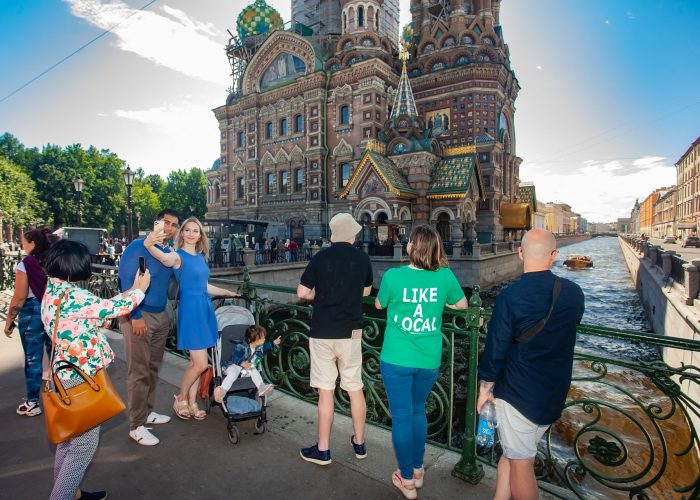
St. Petersburg was founded by Peter the Great in 1703 on a cluster of islands in the Neva delta, built by force of will on swampy land interlaced with rivers and canals . The result is a city that often gets called the “Venice of the North,” though that comparison undersells it. Venice is intimate and crumbling. St. Petersburg is vast and pristine, its pastel facades—pistachio green, porcelain blue, salmon pink—gleaming against grey skies . Over 500 bridges connect the city’s islands, and the effect of walking along a canal and suddenly seeing the candy-colored onion domes of the Church of the Savior on Spilled Blood reflected in the water is genuinely arresting .
That church alone justifies the trip for many people. Built on the site where Tsar Alexander II was assassinated in 1881, its exterior is a riot of glazed tiles and intricate domes that looks almost cartoonish until you step inside. The interior is covered, floor to ceiling, in over 7,000 square meters of mosaics—millions of tiny tiles depicting saints and scenes in colors that seem to glow . People walk in, stop dead, and stare upward with their mouths open. It happens to everyone.
Then there is the Hermitage. You have probably heard the numbers: one of the largest art museums in the world, over three million items, housed in the Winter Palace and five other buildings . Numbers like that are meaningless until you are inside, lost in a sea of green and gold, where chandeliers shimmer like captured sunlight and gargantuan malachite vases tower over rooms where Catherine the Great once walked . The building itself is half the attraction—1,786 doors, 1,945 windows, and over a thousand lavishly decorated halls, many open to the public . You could spend nine years there, as one local guide reportedly reminded a visitor, and still not see everything . Most travelers allocate a day. It is not enough, but it is what you have.
Beyond the headline attractions, St. Petersburg rewards wandering. Nevsky Prospekt, the city’s main artery, is busy and touristy but genuinely beautiful, lined with bookshops, old facades, and the occasional street musician . The Summer Garden, established by Peter the Great in the early eighteenth century, offers ornamental fountains and manicured paths where emperors once strolled . And the metro—yes, the metro—is worth a detour. Stations like Avtovo, with columns clad in pressed glass lit from within, look like halls built out of cut crystal . People call it one of the most beautiful metro systems in the world, and for once the internet is not exaggerating.
For those willing to venture outside the city center, the suburban palaces are not optional extras. Peterhof, the tsar’s summer estate, features over 150 fountains and cascades that start promptly at 11 AM in season . The Catherine Palace at Tsarskoye Selo houses the legendary Amber Room, a chamber of walls covered in amber panels that glows under flashlight . Skipping these because you are “staying in the center” is like going to Paris and skipping Versailles—technically possible, but why ?
The Argument Against: Cost, Crowds, and the Weight of History
Here is the uncomfortable truth that glossy travel features tend to gloss over: St. Petersburg is not cheap, and it is not easy. The average tourist spent about 12,400 rubles per day in the summer of 2026, with the total cost of a trip running around 68,400 rubles per person . That is not outrageous by Western European standards, but it adds up quickly when you factor in museum tickets, theater seats, and the inevitable splurge on a canal cruise. Budget travelers can survive on less, but this is a city that wants you to spend.

The weather is another factor that brochures do not emphasize enough. St. Petersburg sits at a northern latitude that gives it the famous White Nights—from late May to mid-July, the sun never fully sets, and the sky remains a continuous rosy dusk . This is magical. It is also disorienting. Locals celebrate with city-wide festivals, open-air concerts on Palace Square, and the spectacle of watching the drawbridges open at 2 AM against a lilac-pink sky . But the flip side is winter, when darkness falls by mid-afternoon and the cold cuts through even the thickest coat. Snowy days make the city center look magical, but they also make museum-hopping a survival exercise . There is no bad time to visit, but there are definitely times that demand more from you.
Crowds are the third pillar of the anti-St. Petersburg argument. The city welcomed roughly 6.2 million tourists between May and September 2026 alone . The Hermitage in summer is a crush of tour groups, and the Church of the Savior on Spilled Blood often has a line that snakes around the block. September is the sweet spot—fewer crowds, stunning cityscapes, and weather mild enough for long walks . But if you can only travel in July, you will share the city with a lot of other people who had the same idea.
Finally, there is the psychological weight of the place. St. Petersburg is not just beautiful; it is heavy. The city endured a brutal three-year siege during World War II that claimed over a million civilian lives . The Peter and Paul Fortress, now a popular tourist site, was once a notorious prison for political prisoners . Dostoevsky walked these streets and set his darkest novels here; you can trace Raskolnikov’s “murder walk” from Crime and Punishment if you are so inclined . This is a city that wears its history openly, and some travelers find that intensity exhausting. It is not a place for pure escapism.
Book your day trips from St Petersburg today
The Verdict: Who Should Go, and How to Do It Right
St. Petersburg is worth visiting if you are the kind of traveler who values depth over relaxation. If your ideal vacation involves lying on a beach with a cocktail, this is not your city. If your ideal vacation involves standing in a cathedral with your neck craned back, trying to absorb seven thousand square meters of mosaic while a tour group jostles past you, book the flight.
The key to doing St. Petersburg well is pacing. Do not try to see everything. Plan for at least four full days, ideally five or six . Day one should be the Hermitage and Palace Square. Day two, the churches and Nevsky Prospekt. Day three, a full-day excursion to Peterhof or Pushkin—not both in one day, as you will rush through both and enjoy neither. Day four, the Peter and Paul Fortress, a canal cruise, and a slow evening. If you have a fifth day, spend it wandering. Get lost in the narrow streets of the center. Sit by the Neva embankment and watch the light change. St. Petersburg is a city meant to be wandered, and sometimes a simple stroll along the river will leave a more lasting impression than another museum .
Go in late May or early June if you want the White Nights. Go in September if you want fewer crowds and reasonable weather. Go in winter if you want to see a frozen, snow-covered version of the city that feels like a different world entirely—but pack accordingly .
And see a ballet. The Mariinsky Theatre is the premier stage for opera and ballet in Russia, with a history that stretches back centuries . Watching The Nutcracker there is not just a performance; it is an entry into a dream, Tchaikovsky’s music filling an ornate hall while dancers glide across the stage with an exactness and emotional potency that is distinctly Russian . Tickets can be expensive, but this is one of those experiences that justifies the splurge. You will remember it longer than you will remember the extra money in your bank account.
St. Petersburg is not an easy city. It is not a cheap city. It is not a city that lets you relax. But it is a city that offers something increasingly rare in the modern world: the chance to stand in a room where history happened, surrounded by objects of almost incomprehensible beauty, and feel genuinely small. That is worth the cost of a plane ticket. That is worth the aching feet. That is worth the grey skies and the cold wind and the crowds.
Go. Just do not expect to come back rested.
Book your St Petersburg walking tours today