St Petersburg in the Current Context: Safety, Access, and the Persistent Pull of the Northern Capital
Important Note: The following is an informational article based on official government travel advisories, Russian visa regulations, and available data. It is not a recommendation to travel. Most Western governments currently advise against all travel to Russia. The decision to visit is a serious personal judgment that should be made only after consulting your own country’s latest official travel advice and understanding the significant risks involved.
St Petersburg occupies a peculiar place in the contemporary imagination. The city of the Bronze Horseman, the Hermitage’s endless galleries, and the white nights over the Neva has always been a destination of almost mythic cultural weight. Yet the geopolitical reality since February 2022 has cast a long shadow over travel to Russia. Western governments have issued stark advisories, direct flights from the European Union are suspended, and international payment systems no longer function on Russian soil. And yet, the city continues to receive visitors. The question for many prospective travellers is not whether St Petersburg is beautiful—that is settled—but whether it is safe, accessible, and worth the considerable logistical and legal caution it now demands.
A City That Still Draws the World
Despite the war in Ukraine and the sanctions regime that followed, St Petersburg has not become a closed city. The data tells a story of persistent, if altered, tourism. In 2025, Russia issued over 766,000 unified electronic visas in the first eleven months of the year, with more than 654,000 entries made on those visas—a significant increase from the 576,000 e-visa entries recorded in 2024 . Officials expect the final 2025 figure to exceed 700,000 entries.
Crucially, citizens of European Union countries remain eligible for this electronic visa, and many have continued to use it. Russian Foreign Minister Sergei Lavrov noted in late 2025 that EU citizens continue to benefit from a simplified visa regime, including the e-visa mechanism, which Russia has maintained unilaterally even as EU-Russia visa facilitation agreements have frayed . The e-visa is open to citizens of 64 countries, a list that includes Germany, France, Italy, Spain, the Netherlands, Poland, and every other EU member state, as well as China, India, Japan, Turkey, and Mexico . Citizens of the United States, the United Kingdom, Canada, and Australia are notably noteligible for the e-visa and must apply through a Russian consulate for a traditional paper visa .
This distinction matters enormously for the practical experience of visiting. For an EU citizen, the process is now remarkably streamlined. The application is completed online at the Russian Foreign Ministry’s dedicated portal, requires only a digital photograph and a passport scan, costs approximately $52, and is typically processed within four calendar days . Since August 2025, the visa’s validity has been extended to 120 days from issuance, with a permitted stay of up to 30 days from the date of entry . It is a single-entry visa, valid across the entire territory of the Russian Federation, and accepted at major air, rail, road, and water checkpoints, including St Petersburg’s Pulkovo Airport .
For American, British, Canadian, and Australian passport holders, the barrier is higher. The consular visa process requires an invitation letter (typically obtainable through a hotel or tour operator), involves biometric data submission, and carries a longer processing time and higher cost . This asymmetry in access helps explain why the profile of Western visitors to St Petersburg has shifted—EU citizens can still travel with relative ease, while Anglophone visitors face a more deliberate bureaucratic hurdle.
The Security Landscape: What the Advisories Say
It would be irresponsible to discuss travel to St Petersburg without foregrounding the security warnings. The United States Department of State maintains a Level 4: Do Not Travel advisory for Russia, citing terrorism, unrest, wrongful detention, and the broader security situation . Australia’s Smartraveller and New Zealand’s SafeTravel similarly advise against all travel, pointing to the risk of arbitrary detention and the ongoing conflict with Ukraine . Germany’s Auswärtiges Amt has issued a formal Reisewarnung—a travel warning—for the Russian Federation, explicitly noting that the area around St Petersburg and the Leningrad Oblast has been targeted by drone attacks and that airspace closures can occur with little notice .
These are not abstract warnings. The security situation in western Russia is genuinely dynamic. Drone attacks on infrastructure have affected the region around St Petersburg, and flight disruptions—including sudden airport closures—have become a recurring feature of travel in and out of Russia . The German advisory specifically warns that travellers should expect significant risks from drones and falling debris in the Russian Federation, and that the area around St Petersburg has been a target .
For a visitor to the city centre—the Hermitage, Nevsky Prospect, the Church of the Savior on Spilled Blood—the day-to-day experience is unlikely to resemble a war zone. St Petersburg’s historic core remains a functioning city with museums, restaurants, and theatres operating. But the possibility of sudden disruption is real, whether from a drone-related airport closure that strands you, a mobile internet shutdown that severs navigation and communication, or the broader legal risks that come with travelling in a country where the rule of law has become increasingly unpredictable for foreigners.
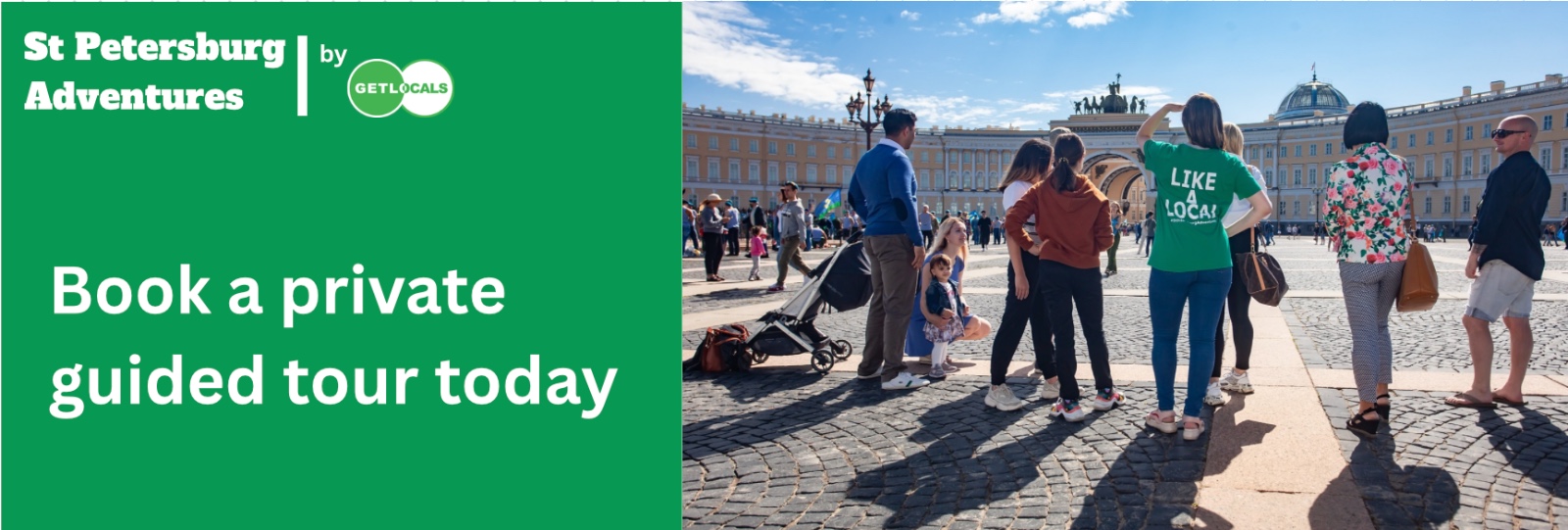
Book package tours to St Petersburg
Practical Safety Advice for the Visitor
Financial preparation is non-negotiable. Visa and Mastercard issued outside Russia do not work in Russia. This is not a temporary glitch; it is a structural consequence of sanctions. You cannot withdraw cash from ATMs with a foreign card, and you cannot transfer money into Russia electronically . The only reliable method is to bring sufficient cash—euros, US dollars, or another convertible currency—and exchange it into rubles upon arrival or at authorised exchange points. The German Foreign Office advises bringing enough cash to cover not only daily expenses but also a reserve for medical emergencies, as access to funds is effectively severed once you enter the country . Note also that EU regulations restrict the amount of euro cash you may bring into Russia; amounts deemed beyond personal use may be confiscated and could trigger criminal proceedings .
Connectivity requires planning. Foreign SIM cards are subject to restrictions, and mobile roaming may be limited or blocked for extended periods after arrival . Purchasing a local Russian SIM card now requires a cumbersome identification process involving a SNILS number and biometric verification, which is impractical for a short-term visitor . Mobile internet shutdowns can occur in specific districts or across the city with little warning, and VPN services—while not explicitly illegal for personal use—are increasingly throttled or blocked, with unverified VPN use carrying legal risk . Download offline maps, carry printed addresses, and do not rely on real-time navigation.

Legal caution is paramount. Russian law enforcement has broad discretion, and the legal environment for foreigners has become markedly less predictable. The US State Department warns that Russian officials may question and threaten US citizens without reason and that the risk of wrongful detention remains high . German authorities warn of arbitrary detention, particularly for dual nationals, and note that personal electronic devices, social media accounts, and private correspondence can be accessed, restored, and used as evidence . The practical implication is simple: do not bring electronic devices containing sensitive information; log out of social media accounts and avoid political commentary entirely, whether online or in conversation. Photography of military installations, security infrastructure, and even some government buildings is prohibited and can attract police attention .
Avoid unlicensed tours and risky activities. St Petersburg has a well-established market for “roofing” tours—illegal excursions onto the rooftops of historic buildings—and other adventure experiences. In August 2026, the Russian Investigative Committee issued a public warning to tourists in St Petersburg about the dangers of such unlicensed excursions, following a criminal case involving an illegal rooftop tour organiser . Stick to established museums, licensed tour operators, and official guides. The savings from a cheap “exclusive” experience are not worth the risk of injury or legal entanglement. Stick to reputable guided tour agencies in St Petersburg.
Stay informed and have an exit plan. Register with your country’s embassy if possible, though consular services are severely limited in Russia. The US Embassy in Moscow has reduced staff, and all US consulates in Russia have suspended operations . The ability of any Western government to assist a detained or stranded citizen is constrained. Monitor local news for airport closures and security incidents, and maintain flexibility in your travel plans.
The Enduring Allure
Why do people still go? The answers are as varied as the visitors themselves. For some, it is the Hermitage’s collection of Rembrandts and Matisses, accessible with a ticket and a few hours of patience. For others, it is the architecture of Rastrelli and Rossi, the canals, the literary ghosts of Dostoevsky and Pushkin. There is also a cohort of travellers—businesspeople, academics, diaspora Russians, and the simply curious—for whom St Petersburg represents a connection to a culture and a history that predates the current political rupture.
The city itself has not stopped functioning. Its museums are open, its restaurants serve customers, its hotels receive guests. The tourist infrastructure that served millions before 2022 has adapted to the new reality: fewer Western credit cards, fewer direct flights, fewer Anglophone tourists, but a steady stream of visitors from China, India, the Middle East, Turkey, and the EU. The e-visa system has made entry easier for many of these travellers, and the Russian government has actively promoted it as a tool for maintaining international connections . Decide when is the best time to visit St Petersburg and prepare in advance.
Frequently Asked Questions
Can I get a visa to visit St Petersburg as an EU citizen?
Yes. Citizens of all EU member states are eligible for the unified electronic visa. Apply online at the Russian Foreign Ministry’s portal (electronic-visa.kdmid.ru) at least four calendar days before your intended arrival. The fee is approximately $52, and the visa is typically processed within four days. It allows a single entry and a stay of up to 30 days within a 120-day validity period .
Can US citizens visit St Petersburg?
Yes, but not on an e-visa. US citizens must apply for a traditional consular visa through a Russian embassy or visa centre. This requires an invitation letter (typically from a hotel or tour operator), a completed application form, a photograph, and payment of the consular fee. Processing times are longer than the e-visa .
Is it safe to walk around St Petersburg as a tourist?
The central historic districts—around the Hermitage, Nevsky Prospect, and the main canal embankments—are generally as safe as any major European city in terms of ordinary street crime. The more significant risks are structural: the possibility of drone-related disruptions, arbitrary law enforcement, and the inability to access funds or consular support if something goes wrong. Exercise heightened situational awareness, avoid demonstrations, and do not engage in political discussions or photography of sensitive sites .
Can I use my credit card in St Petersburg?
No. Visa and Mastercard issued outside Russia do not function in Russia. You must bring cash and exchange it for rubles. ATMs will not dispense cash from foreign cards, and electronic transfers from abroad are effectively impossible .
Will my mobile phone work in Russia?
Foreign SIM cards may have data and SMS services blocked for the first 24 hours after entry, and prolonged roaming restrictions are possible . Local SIM cards require an extensive identification process that is impractical for short visits. Mobile internet shutdowns can occur in specific areas without warning. Download offline maps and do not rely on your phone for essential navigation or communication.
Are there direct flights from the EU to St Petersburg?
Direct air traffic between the EU and Russia has been suspended. Travellers from EU countries typically fly via hubs in Turkey (Istanbul), the UAE (Dubai), Serbia (Belgrade), or other countries that maintain air links with Russia. Be aware that Russian airspace is closed to carriers from most European states, and that airports in western Russia, including Pulkovo, can experience sudden closures due to security incidents .
What should I do if I need medical care?
Western-standard medical facilities are limited. The German Foreign Office advises bringing sufficient cash to cover medical emergencies, as foreign insurance may not be directly accepted and payment is typically required upfront . Travel insurance that covers Russia is increasingly difficult to obtain; verify coverage carefully before departure. Some international insurers exclude Russia entirely due to sanctions.
Is it safe for LGBTQ+ travellers?
Russian law prohibits the “propaganda” of “non-traditional sexual relations,” and the “international LGBT movement” has been designated as extremist. Public displays of same-sex affection, rainbow symbols, and any discussion or promotion of LGBTQ+ rights can result in fines, detention, and deportation for foreigners . The US State Department warns that foreigners found guilty of violating this law may be arrested and detained for up to 15 days before deportation . LGBTQ+ travellers should exercise extreme discretion.
What about dual nationals?
If you hold Russian citizenship alongside another nationality, Russian authorities regard you exclusively as a Russian citizen. This has profound implications: you may be subject to mobilisation, and Western consulates cannot provide consular protection. The German Foreign Office explicitly warns dual nationals of the particular risks of travelling to Russia . The US State Department notes that Russia has forced dual citizens to join the military and has prevented them from leaving .
Should I register my presence with the authorities?
Yes. All foreign visitors must have a migration card, which is typically issued at the border, and must be registered by their host (hotel or landlord) within seven working days of arrival. Carry your passport, visa, and migration card at all times; copies are not accepted by police .
What is the single most important precaution I can take?
Bring enough cash. The financial isolation of Russia from Western banking systems is comprehensive, and the inability to access funds—for a meal, a taxi, or a medical emergency—is the most immediate and practical risk a visitor faces. Plan your budget generously, carry it in cash, and keep a reserve separate from your daily spending money.