The Soviet Shadow Over St. Petersburg: History, Trauma, and the Strange Allure of Leningrad
St. Petersburg is a city that wears its history in layers. The imperial grandeur of the Winter Palace, the neoclassical sweep of Nevsky Prospekt, the canals that earned it the nickname “Venice of the North”—these are the elements that most visitors come to see. But beneath this elegant surface lies another city, one that existed for nearly seven decades under a different name and a different system. From 1924 to 1991, this was Leningrad: the cradle of the Revolution, the city that endured a 900-day siege, and the proving ground for Soviet modernity. Today, that Soviet past is not merely a historical footnote. It is a living, breathing, and often contested presence—one that draws a growing number of travelers seeking to understand, experience, or simply glimpse the world that was.
The Birth of Leningrad: Revolution and Renaming
The story of Soviet St. Petersburg begins, as so many things do, with a name change. In 1914, as World War I ignited anti-German sentiment, the city was renamed Petrograd—a more “Russian-sounding” alternative to the German-inflected St. Petersburg . Just three years later, in 1917, the city became the epicenter of two revolutions that would reshape the world. The February Revolution toppled the tsarist autocracy; the October Revolution, led by Vladimir Lenin, brought the Bolsheviks to power. The city that had been the seat of the Romanov dynasty for two centuries became the birthplace of the Soviet state.
Lenin’s government did not stay long. Fearing German advances and seeking a more secure base, the Bolsheviks moved the capital to Moscow in March 1918 . But Petrograd—and later Leningrad—retained a symbolic weight that Moscow could never quite match. It was here that the Revolution had begun. It was here that the old world had been shattered.
When Lenin died in January 1924, the city was renamed in his honor. The decision was more than sentimental. As one historical account notes, the renaming carried profound political symbolism: St. Petersburg had stood at the head of the tsarist empire, and rechristening it Leningrad expressed the monumental social and political transformations that had swept the country . The city would carry that name for sixty-seven years, through industrialization, terror, war, and eventual collapse.
The Siege: Leningrad’s Defining Trauma
No discussion of Soviet Leningrad can avoid the Blockade. From September 1941 to January 1944, German forces encircled the city in one of the most devastating sieges in human history. More than one million Leningraders died—from starvation, cold, and artillery bombardment . The city’s population, which had recovered to nearly three million by 1941, was decimated. Yet Leningrad did not surrender.
The siege became the crucible in which a distinct “Leningrader” identity was forged. As one scholarly analysis puts it, it was not party decrees or propaganda that created this collective identity, but the shared suffering of the blockade and the pride of survival . Even today, members of the war generation still identify themselves as “Leningraders” rather than “Petersburgers,” a distinction that carries emotional weight far beyond geography.
This trauma shaped the city’s postwar trajectory in profound ways. Leningraders became known for a certain reserve, a quiet resilience, and a fierce attachment to their city’s cultural heritage. The postwar reconstruction prioritized the restoration of imperial monuments even as housing remained desperately scarce—a counterintuitive allocation of resources that reflected the city’s determination to honor its past while building its future .
Book a Leningrad soviet history tour
Everyday Life Under Soviet Rule: Communal Apartments and the Housing Question
For ordinary residents, the Soviet era was defined less by ideology than by the practical realities of housing. The communal apartment—the kommunalka—became the emblematic living arrangement of Soviet Leningrad. After the 1917 Revolution, spacious apartments of the bourgeoisie were partitioned and allocated to multiple families. By the 1920s, communal flats made up nearly 70 percent of the city’s housing stock . Even into the 1980s, they accounted for almost 40 percent of apartments in the historic center .
Life in a kommunalka meant sharing a kitchen, bathroom, and toilet with strangers who became, for better or worse, intimate parts of daily existence. One resident, a 75-year-old who had lived in a communal flat for fifteen years, described it with affection: “I really like communal flats and I wouldn’t want to live anywhere else. You’re never alone. There’s always someone around and that’s good” . Others were less sentimental. A younger resident acknowledged the dual nature of the experience: “A communal flat has two sides: there are wonderful things along with nasty things” .
The housing crisis persisted for decades. The mass construction of khrushchyovki—the cramped, concrete-block apartment buildings of the Khrushchev era—offered a path out of communal living, but these new apartments were far from luxurious. Families moving from high-ceilinged communal rooms often had to buy new furniture because their old pieces simply would not fit . Later Soviet housing projects pushed even further from the center, creating vast, monotonous districts that one Russian bard described as “depressing, identical apartment buildings, with identical roofs, windows and entrances” .
This housing legacy is still visible in St. Petersburg today. The historic center retains thousands of communal flats, though their numbers are declining as the city pursues a resettlement program. In 2008, the authorities launched an initiative to move residents out of communal apartments; by 2015, their number had fallen from 116,000 to 83,000 . Yet the kommunalka endures, not only as housing but as a cultural phenomenon—featured on guided tours, celebrated at an annual festival, and studied at academic conferences .

The Nostalgia Industry: Selling the Soviet Past
Walk down Nevsky Prospekt today and you might stumble upon the Soviet Café Kvartirka, a “mid-70s USSR time capsule” where Lenin watches from behind the bar and televisions play decades-old films . Or you might join a tour of a communal apartment, where visitors can see the layers of newspaper used as wallpaper, smell the cabbage soup, and hear stories of shared kitchens and neighborly surveillance . The Soviet past, it seems, has become a commodity.
This is not unique to St. Petersburg, but the city has a particular concentration of what scholars call “Soviet nostalgia tourism.” The phenomenon attracts several distinct groups. First, there are older Russians who lived through the Soviet era and wish to revisit, or romanticize, their youth. A 2011 report from St. Petersburg described regular customers at the Soviet Café who remembered their Pioneer days and spoke of the USSR as “a great and wealthy country” whose dissolution was “probably a pity” .
Second, there are foreign tourists with their own connections to the Soviet past. Chinese travelers, particularly those in their sixties and seventies, have been drawn to “red tourism” routes in Russia, visiting sites associated with the October Revolution and the Soviet legacy. A retired Chinese visitor explained that “the music, culture and large-scale industries in the former Soviet Union had a strong influence on our country and people my age. The trip fulfilled a wish I had for decades” . St. Petersburg’s local government has actively promoted tours with titles like “Chinese comrades in red Petrograd” to cater to this market .
Third—and perhaps most curiously—there is a younger generation of travelers, including Russians born after 1991, who are drawn to Soviet aesthetics, design, and material culture. For them, the Soviet Union is not a memory but a historical curiosity, a source of retro imagery and vintage objects. A Russian report on “traveling to the Soviet past” notes that while older generations seek nostalgia and younger ones seek retro aesthetics, the tourism industry has learned to package memory into itineraries that appeal to all three groups simultaneously .

Why Nostalgia Persists: The Sociology of Longing
The persistence of Soviet nostalgia in Russia is a complex phenomenon. Surveys have shown that a significant portion of the population—57 percent, according to one recent poll—regrets the collapse of the USSR, viewing it as a mistake that could have been avoided . This sentiment is strongest among older generations: 80 percent of those born in the postwar period express regret, compared to only 14 percent of young people .
But the numbers tell only part of the story. Sociologists distinguish between different types of nostalgia. For some, it is personal—a longing for youth, for a time when life seemed simpler and more secure. For others, it is ideological—a belief that the Soviet system, despite its flaws, provided stability, equality, and a sense of collective purpose that the post-Soviet order has failed to replicate. Focus group discussions in 2024 revealed sentiments like “we are united by our past, our victorious past” and “there was one people, one idea, a hymn, a flag” . These are not necessarily political statements; they are expressions of a longing for belonging.
There is also a darker dimension to this nostalgia. The Soviet past is increasingly invoked by the Russian state to legitimize its current geopolitical ambitions, with the collapse of the USSR framed as “the greatest geopolitical tragedy” of the twentieth century . Tourism and memory culture are not immune to this instrumentalization. Scholars studying St. Petersburg’s guidebooks and museum exhibitions have noted how the Soviet past is “recycled” and transformed into “Soviet myth”—a sanitized, heroic narrative that replaces the more complicated realities of Soviet life .
Yet for many travelers, the appeal is simpler and more personal. The Soviet era produced a distinctive material culture—the retro vending machines, the vintage tramcars, the heavy glassware, the concrete architecture—that has an aesthetic appeal quite separate from its political context. Walking through a communal apartment or riding a retro tram allows a visitor to touch a world that no longer exists, to imagine what it might have been like to live in a society organized around entirely different principles. It is history made tangible, and for that reason alone, it draws people in.
The Contemporary Pilgrimage
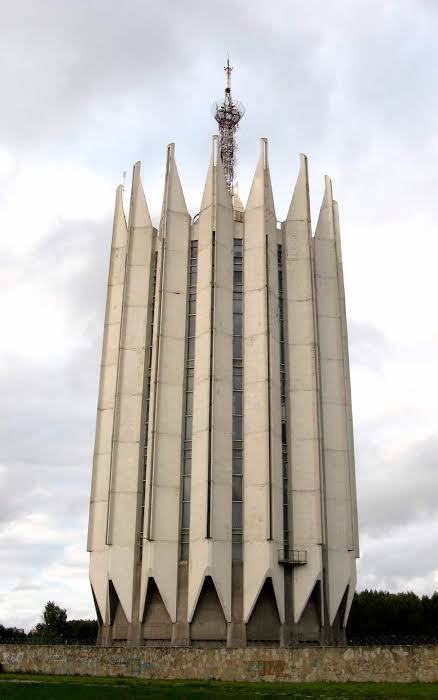
St. Petersburg today is a city of contradictions. It is a UNESCO World Heritage site and a showcase of imperial splendor, but it is also a place where the Soviet legacy is woven into the urban fabric and the collective memory. Visitors come for the Hermitage and the Mariinsky Theatre, but they also come for the brutalist concrete of the Robotics Institute, the communal flats of the Petrograd Side, and the retro cafes that serve Soviet-era comfort food.
This pilgrimage takes many forms. Some travelers seek out the sites associated with the Revolution and will use a private guide in St Petersburg—the Smolny Institute, where Lenin directed the Bolshevik uprising; the cruiser Aurora, whose blank shot signaled the assault on the Winter Palace. Others are drawn to the Siege memorials, the Piskaryovskoye Cemetery where hundreds of thousands of blockade victims are buried, the Museum of the Defense and Siege of Leningrad. Still others come for the everyday ephemera of Soviet life: the Soviet-era metro stations with their chandeliers and marble, the retro confectionery shops, the flea markets where medals and propaganda posters are sold alongside matryoshka dolls.
For foreign visitors, particularly those from countries with their own complicated relationships to communism, Russia offers a chance to see what a socialist society actually looked like—not as a theoretical abstraction but as a lived reality, with all its achievements and failures. Chinese “red tourists” are perhaps the most visible example, but they are not alone. Western architecture enthusiasts come for the constructivist and brutalist heritage. Historians come for the archives. And ordinary travelers come because the Soviet Union, despite having vanished more than three decades ago, remains one of the most consequential experiments in human history, and St. Petersburg was one of its most important stages.
A City of Layers
The Soviet period did not erase the St. Petersburg that came before it, nor did the post-Soviet period erase the Soviet city. Instead, these layers coexist, sometimes uneasily, sometimes productively. A visitor can spend the morning in the Hermitage, admiring the imperial collections, and the afternoon in a communal apartment museum, learning about the families who were relocated into those same palaces after the Revolution. They can walk from the gilded dome of St. Isaac’s Cathedral to the concrete mass of the Russ Hotel in a matter of minutes.
This layering is what makes St. Petersburg such a compelling destination for anyone interested in the Soviet experience. It is not a museum of communism, nor a theme park of nostalgia. It is a living city where the past is still being negotiated—where the name “Leningrad” still appears on memorials and in the memories of older residents, where the communal apartment is both a relic and a home, where the Soviet legacy is celebrated, mourned, and commodified all at once.
For travelers, this means that a visit to St. Petersburg can be many things: a pilgrimage, an education, a nostalgia trip, or simply a chance to see a side of Russia that the postcards rarely show. The city does not offer easy answers about the Soviet past. But it offers something perhaps more valuable: the opportunity to encounter that past in all its complexity, to walk through the spaces where history happened, and to decide for oneself what it all meant.
FAQ
What is the best way to experience Soviet history in St. Petersburg?
A guided tour focused on Soviet history is ideal, as many sites are scattered across the city and not always easy to interpret independently. Key experiences include the Museum of the Defense and Siege of Leningrad, the communal apartment museums, the Smolny Institute, and the Soviet-era metro stations. Retro cafes and themed tours can provide a lighter, more experiential introduction.
Are communal apartments still lived in?
Yes. Thousands of communal flats remain in St. Petersburg’s historic center, though their numbers are declining due to a city resettlement program. Some are open to visitors through festivals or guided tours, allowing a glimpse into this distinctly Soviet living arrangement .
Why do Chinese tourists visit St. Petersburg for “red tourism”?
Many older Chinese travelers grew up during an era when Soviet culture and ideology had a strong influence on China. “Red tourism” routes—including tours of revolutionary sites in St. Petersburg—allow them to connect with that formative period of their lives and see the birthplace of the October Revolution .
Is Soviet nostalgia in Russia primarily a political sentiment?
Not necessarily. While some nostalgia is ideological, much of it is personal or cultural—a longing for the stability, community, and shared identity of the Soviet era, or simply an appreciation for Soviet aesthetics and material culture. Surveys show nostalgia is strongest among older generations and those with lower incomes, suggesting a socio-economic dimension as well .
Can I visit a former communal apartment as a tourist?
Yes. Some communal apartments are open to the public during special events like the annual kommunalka festival, and certain tour operators include visits to communal flats in their itineraries. The Rumyantsev Mansion also has a permanent exhibition on communal living .
What happened to the city’s name during the Soviet period?
St. Petersburg was renamed Petrograd in 1914, at the start of World War I, due to anti-German sentiment. In 1924, after Lenin’s death, it became Leningrad. The original name was restored in 1991, following the collapse of the Soviet Union .
How long did the Siege of Leningrad last?
The blockade lasted approximately 900 days, from September 1941 to January 1944. More than one million civilians died, primarily from starvation and cold. The siege is central to the city’s identity and is commemorated at several museums and memorial sites .